総曲輪のバーとラウンジ





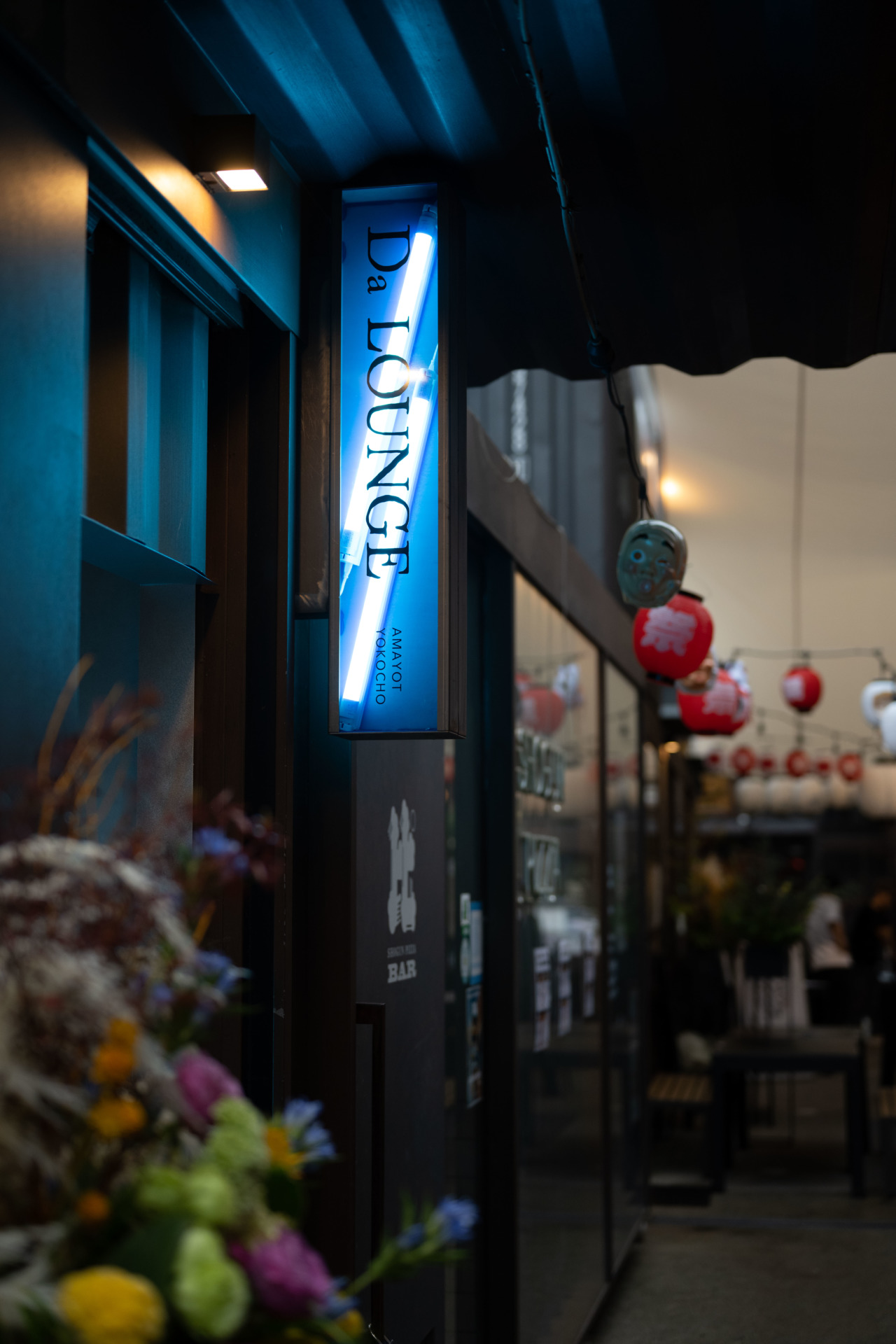


ダフレンズ・ダラウンジ あまよっと横丁
| 竣工 | 2023.09 |
| 所在地 | 富山県富山市 |
| 用途 | バー・ラウンジ |
| 面積 | 14.38㎡/14.38㎡ |
| 設計 | オニヅカセッケイブ 鬼塚 純平 鬼塚来未 |
施工
| 建築 | 株式会社オフィス青山 |
| 家具 | JOINT WOOD WORK |
| 天板 | 株式会社REMARE |
| グラフィックデザイン | BSH design 笹倉 武義 |
| Location | Toyama City,Toyama |
| Program | Bar・Lounge |
| Area | 14.38㎡/14.38㎡ |
| Photo | tuskfoto / ToLoLo studio |
富山市中心部に位置する繁華街にある海運コンテナで構成されたレストラン横丁の8店舗うち、2店舗をバーとラウンジに改修する計画
相場より家賃設定を低くし、1店舗の出店可能期間を数年と制限することで、
誰もが出店に躊躇する金銭面のハードルを下げ、その機会に巡り易く、フレッシュな施設を目指して開業された当施設は、コロナ禍の影響もあり3店舗に空きができてしまっていた。
緊急事態宣言も解除され、街に活気が戻るのか皆が不安になっていた頃、
当時施設の5周年を迎える前に空き店舗を埋め、盛大に祝いたいという施主の思いから本計画が始まった。
依頼を受けた当初、2ヶ月後の引き渡しが決定されており、事業計画と基本設計を同時にスタートしなければならない状況であったため、内装はフレキシブルさと駆け出しの曖昧な事業計画を先導するような提案が必要であった。
そこで既存の海運コンテナから「無骨で工業的な要素」と曖昧な現状を肯定する「フレキシブルさ」、そしてここに活気が戻り「施設のあるべき姿に戻す」ことを願い、
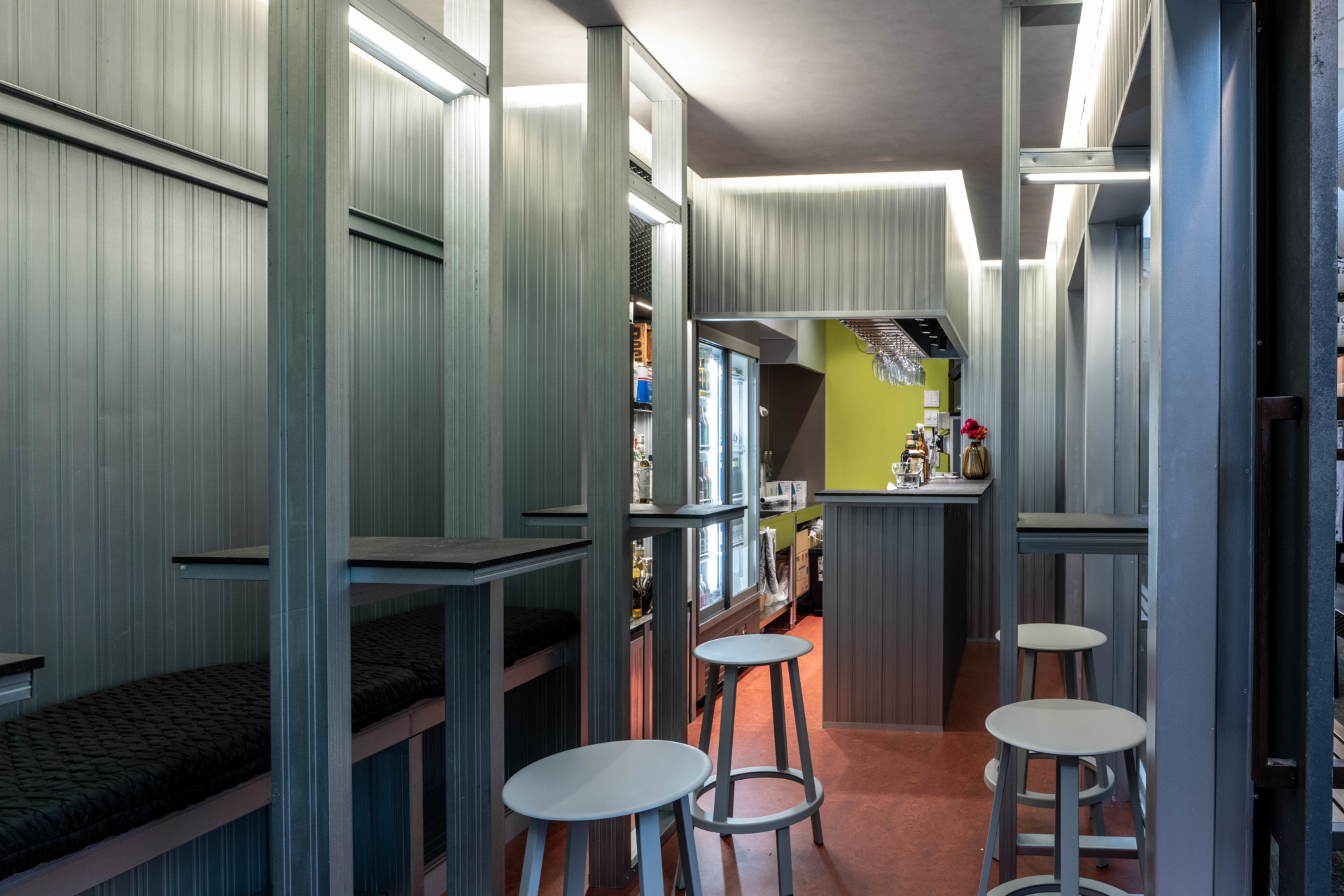
本来下地材である軽鉄やフレキシブルボードを仕上げ材のメインとし、
次出店者の初期費用を抑えることも本計画の一部とした。
カウンターやテーブルの天板には近年取り組みが盛んになってきている海洋プラスチックから再生された天板を採用し、インテリアにアクセントを付けながらインダストリアルでミニマルな空間を目指した。
将来下地材として利用される「軽鉄」「フレキシブルボード」と再利用された「海洋プラスチック」からなる空間である。
狭小空間のバーでは客席はカウンターでのスタンディングがメインとなりがちだが、テーブル席を設け、さらに一部を可動するテーブルとすることでグループ客への対応も可能とした。
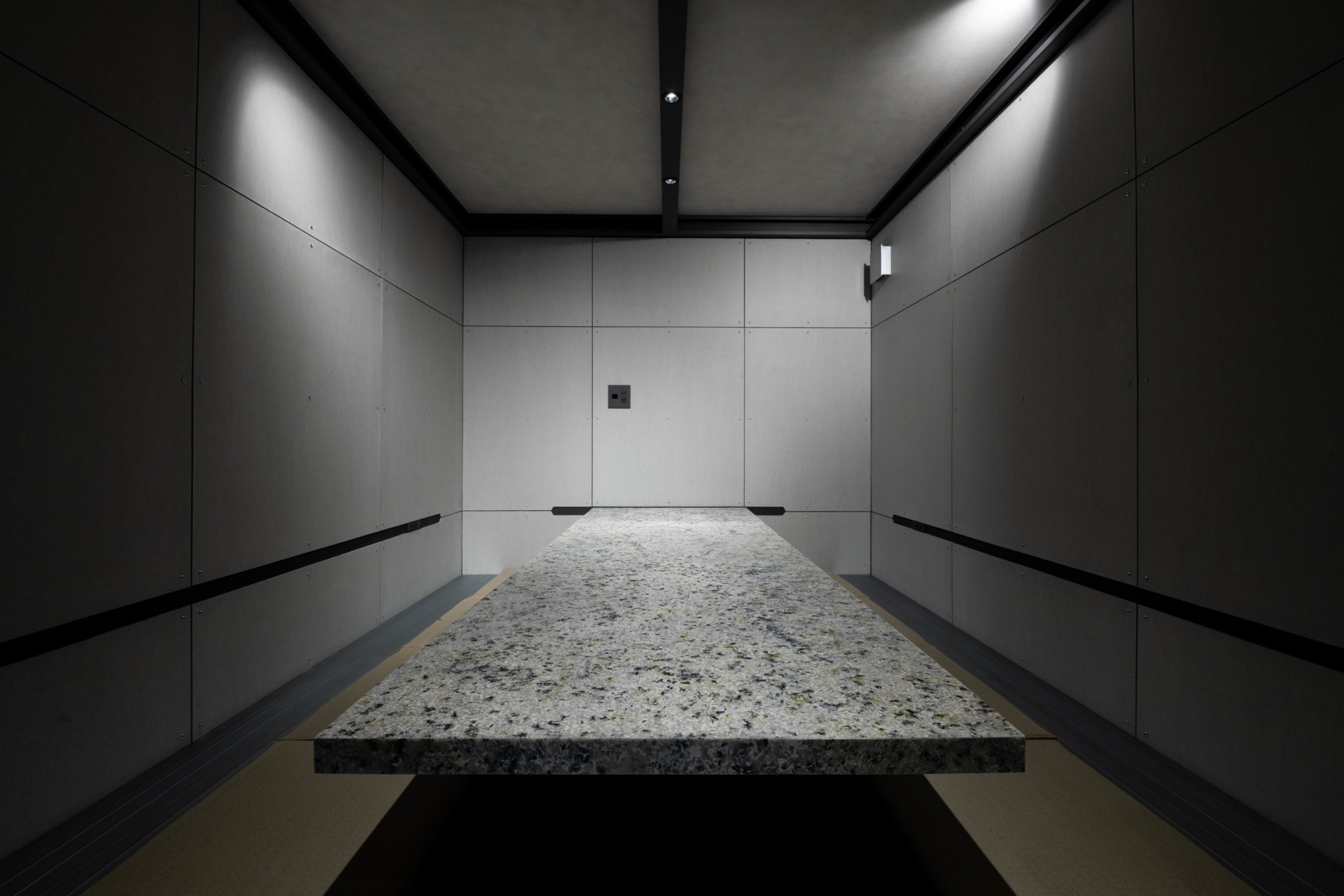
ラウンジは当施設の全店が利用可能とし、団体利用も可能な施設へとアップデートした。
唯一要望のあった”掘り炬燵”は「無骨で工業的な要素」とは対照的であるが、座面と建具の仕上を畳表の原料である井草を採用し、その特徴である触り心地と香りで空間の印象とは違うリラックスできる空間を目指した。
This project involves converting 2 out of the 8 establishments in a restaurant alley—comprised of shipping containers and located in a bustling district in central Toyama City—into a bar and lounge.
The facility was originally established with the aim of lowering financial hurdles for prospective tenants by setting rent below market rates and limiting the leasing period to a few years. This approach was intended to make it easier for new businesses to take the opportunity and to keep the facility fresh. However, due to the impact of the COVID-19 pandemic, 3 establishments ended up vacant.
As concerns arose over whether the city’s vibrancy would return after the state of emergency was lifted, the project was initiated in response to the owner’s desire to fill the vacant spaces and celebrate the facility’s 5th anniversary in a grand manner.
At the time the project was commissioned, the handover was scheduled for just 2 months later, requiring the business plan and basic design to commence simultaneously. In this tight timeframe, a flexible interior design capable of accommodating an as-yet uncertain business plan was essential.
To achieve this, the design leveraged the shipping containers’ inherent “rugged, industrial character” and their flexibility to embrace an ambiguous status quo, with the hope of restoring the facility to its intended lively state. In addition, lightweight steel and flexible boards—originally used as structural materials—were repurposed as the main finishing materials to help reduce the initial costs for future tenants.
For the countertops and table surfaces, a material recycled from ocean plastic, which has gained attention in recent years, was employed. This not only adds an accent to the interior but also helps realize an industrial yet minimalistic space.
The space is composed of lightweight steel and flexible boards, which are intended for future structural use, along with recycled ocean plastic.
While the compact bar area typically favors a standing-only counter setup, the introduction of table seating—including some movable tables—allows for accommodation of group patrons.
Originally, the facility’s compact nature made group use challenging; however, by creating a lounge shared by all establishments, the facility has been upgraded to better suit group use.
The only specific request from the client was the inclusion of a “horigotatsu” (sunken kotatsu). Although this contrasts with the rugged, industrial elements, Japanese rush grass (Igusa)—the raw material for tatami covers—was used for the seating and door finishes. Its distinctive texture and aroma create a relaxing ambiance that offers a contrast to the overall industrial impression.